 Technical
 What Makes an Industrial Motor Drive Durable?
A motor drive can run flawlessly on the bench; the real test is in the warehouse, the field or the production line. Dust, vibration, sudden load changes and temperature swings wear a board down quickly. This article covers where durability actually comes from.
Why the Temperature Range Matters
NESDrive controllers are specified for -10 °C to +40 °C. That is the ambient figure; the heat the board generates itself sits on top of it. Inside a closed cabin in summer, the real temperature can be considerably higher than the outside air. So when selecting a drive, look not only at ambient temperature but also at the ventilation of the mounting location.
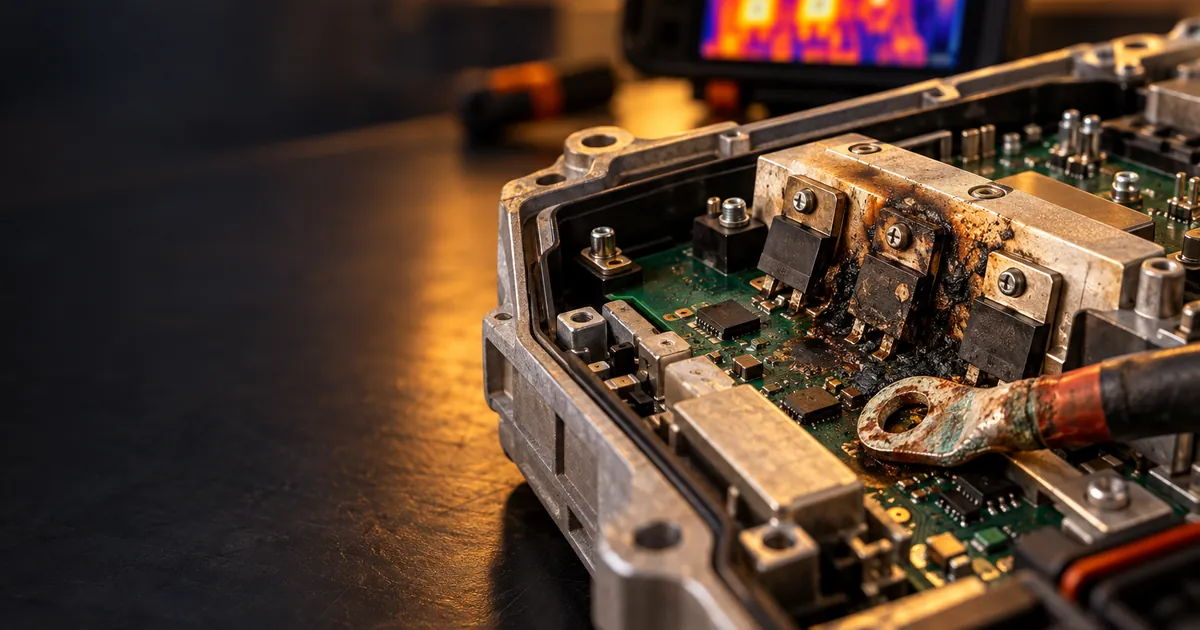
Semiconductor life shortens rapidly with temperature. A power stage that runs continuously hotter wears out far sooner than an identical board running cool. Thermal management is therefore not a comfort issue but a lifetime issue.
Where Does the Heat Go?
- MOSFET losses in the power stage generate most of the heat; losses grow quickly as current rises.
- Heat moves first into the copper layers of the board, then to the housing and heatsink.
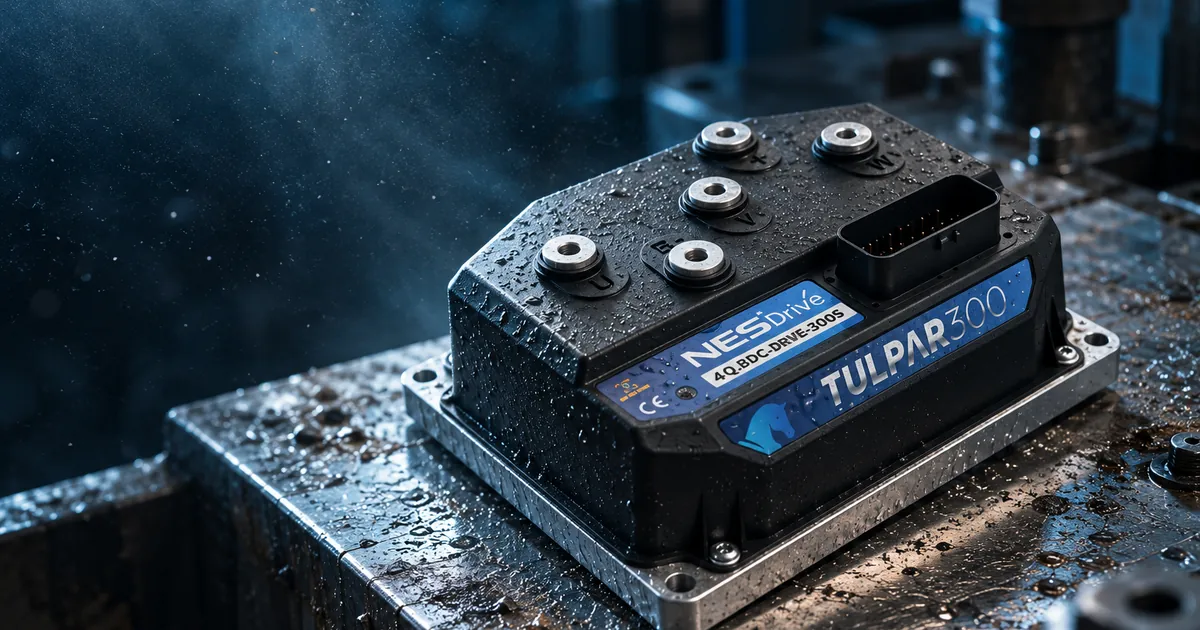
- The aluminium housing is not only protection but also a heatsink; mounting the drive in full contact with a metal surface makes a measurable difference.
- Covering the drive, wrapping it in a cable loom or burying it in insulation cuts the heat path.
Vibration and Mechanical Fatigue
Vibration is constant in forklifts, stackers and agricultural vehicles. Over time it causes micro-cracks in solder joints and connectors. A solid housing and firm mounting points carry that energy away from the board. Fixing the drive to a rigid point near the chassis, rather than the middle of a flexible panel, extends its life.
Electrical Robustness
In battery systems the voltage is not constant: it sags at start-up and rises during regenerative braking. The drive operating range must cover both extremes. Likewise, contactor opening, motor inductance and long cables create transient voltage spikes that the input protection stage has to absorb.
What to Do in the Field
- Mount the drive in full contact with a metal surface so heat conduction is not interrupted.
- Do not block cabin ventilation; trapped hot air is the most common cause of early failure.
- Keep power cables as short as possible and the cross-section adequate.
- On high-vibration vehicles, check connector locks and cable clamps periodically.
Share your application requirements and our engineering team will recommend the best NESDrive model.
 Technical
Why Do Motor Controllers Burn Out?
Why do motor controllers fail and how can you tell? The 7 most common causes, failure symptoms, how to protect the controller, and repair versus replacement.
 Technical
CANopen or Modbus? Motor Drive Communication Protocols
The difference between CANopen and Modbus communication protocols in motor drives, which to choose for which application, and NESDrive support.