What Is Regenerative Braking and What Does It Save?
Regenerative braking is the key to efficiency in electric vehicles and industrial drive systems. But how exactly does it work, and what does it save in practice?
How Does It Work?
A motor spun from the outside generates electricity like a generator. When a vehicle slows down (downhill or braking), the kinetic energy keeps turning the motor. A regenerative drive switches the motor into generator mode at that moment and sends the produced energy back to the battery. So instead of being wasted as heat, braking energy is recovered.
What Does 4-Quadrant (4Q) Mean?
A motor can rotate in two directions, and in each direction it can either drive (motor) or brake (generator). These four possible states are called the "four quadrants". A 4Q drive can control the motor in all four states — driving forward/backward and regenerative braking in both directions. 4Q topology is the prerequisite for regenerative braking.
What Does It Save?
- Range / battery life: recovered energy extends the charge cycle; the effect is clear in stop-and-go vehicles.
- Less heat: energy returns to the battery instead of being burned in a resistor, so the system runs cooler.
- Less mechanical wear: the motor takes over part of the braking, extending brake/pad life.
- Better control: downhill speed limiting and precise deceleration are handled electronically.
NESDrive and 4Q
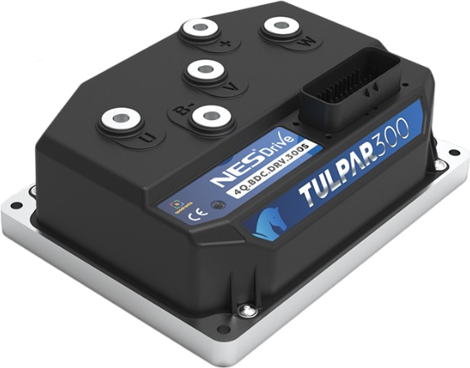
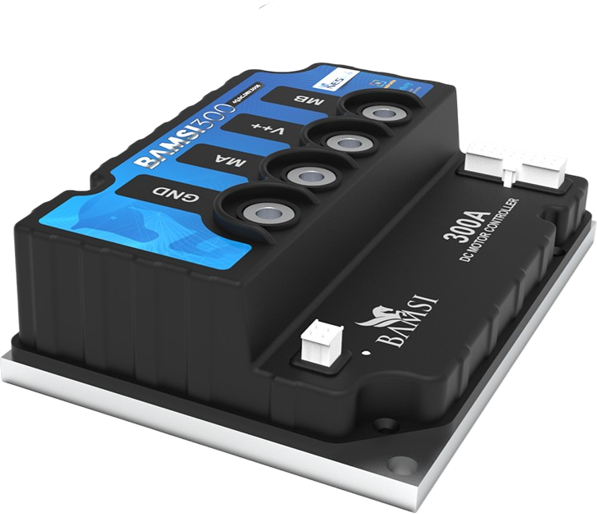
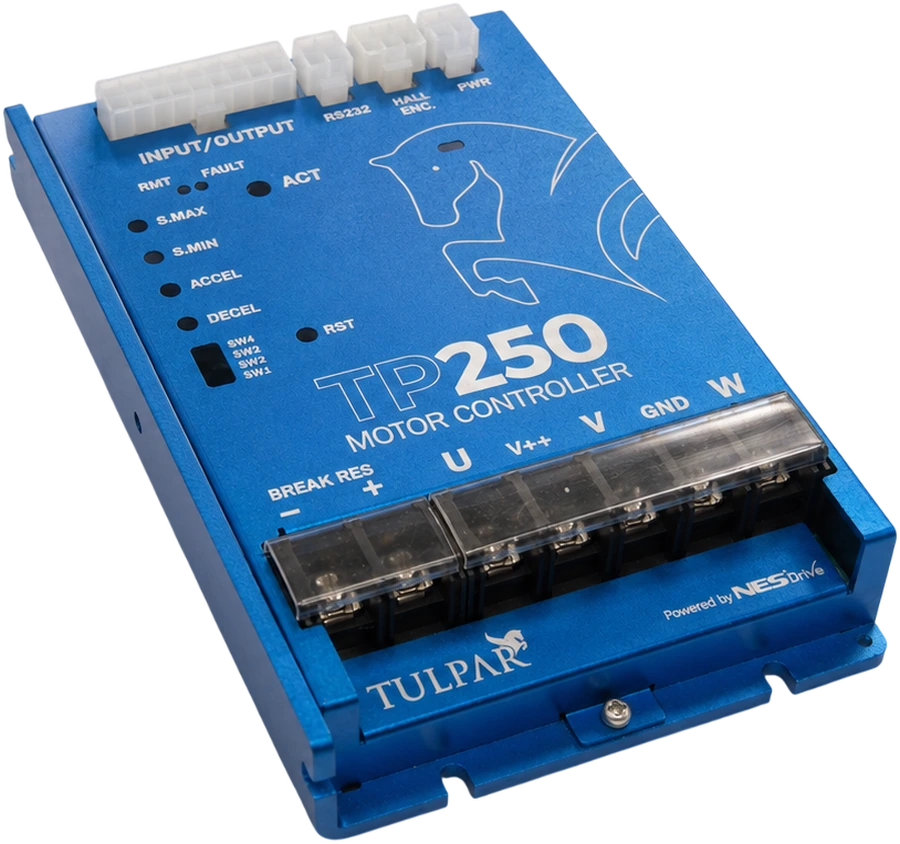
The entire TULPAR and BAMSI series use 4-quadrant (4Q) regenerative topology. This brings both precise driving and energy recovery as standard in AGV, forklift and EV applications.
Share your application requirements and our engineering team will recommend the best NESDrive model.