BLDC or Brushed DC? How to Choose the Right Motor Drive
When designing an electric vehicle, an AGV or an industrial machine, one of the most critical decisions is choosing the right motor drive (motor controller). The wrong drive means efficiency loss, overheating, early failure and shorter battery life. This article covers the difference between brushed DC and brushless (BLDC) drives and how to choose.
The Core Difference Between Brushed DC and Brushless (BLDC)
In brushed DC motors, commutation (switching current to the windings in the right order) is done mechanically with brushes and a commutator. It is simple and low cost, but the brushes wear out and require maintenance. In brushless (BLDC) motors this is done electronically by the drive — no brushes, low maintenance, high efficiency and long life.
In short: on the drive side, the difference is who performs commutation. A BLDC drive must know the rotor position (via Hall sensor, encoder or a sensorless algorithm) to energise the windings at the right moment. That is why BLDC drives are "smarter".
Which One for Which Application?
- Brushed DC: cost-sensitive applications with medium speed/torque where maintenance is acceptable (some stackers, simple drive systems).
- BLDC / PMSM: applications needing high efficiency, quiet operation, long life and precise control (AGV/AMR, forklift traction, mobile robots, EVs).
- ACIM (AC induction): heavy-industry applications requiring high power, ruggedness and low maintenance.
5 Key Criteria When Selecting a Drive
- Voltage class: a range matching your battery/supply (e.g. 24 V, 48 V, 72 V).
- Rated and peak current: must cover continuous demand and safely handle start-up/load peaks.
- Communication: CANopen, Modbus, RS232/RS485 for PLC integration.
- Feedback: Hall, encoder or resolver depending on position/speed accuracy needs.
- Protection & safety: overcurrent, over-temperature, reverse polarity, short circuit and STO where required.
The Equivalent in the NESDrive Family
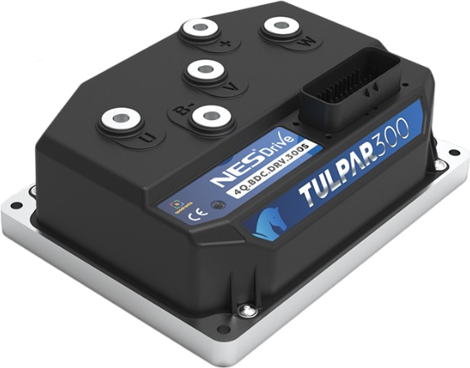
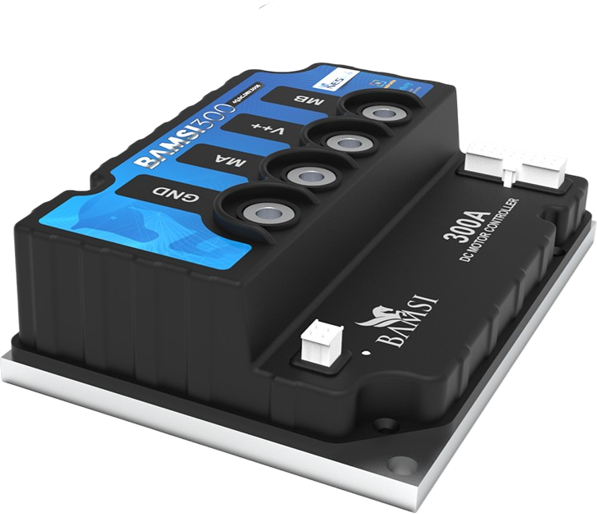
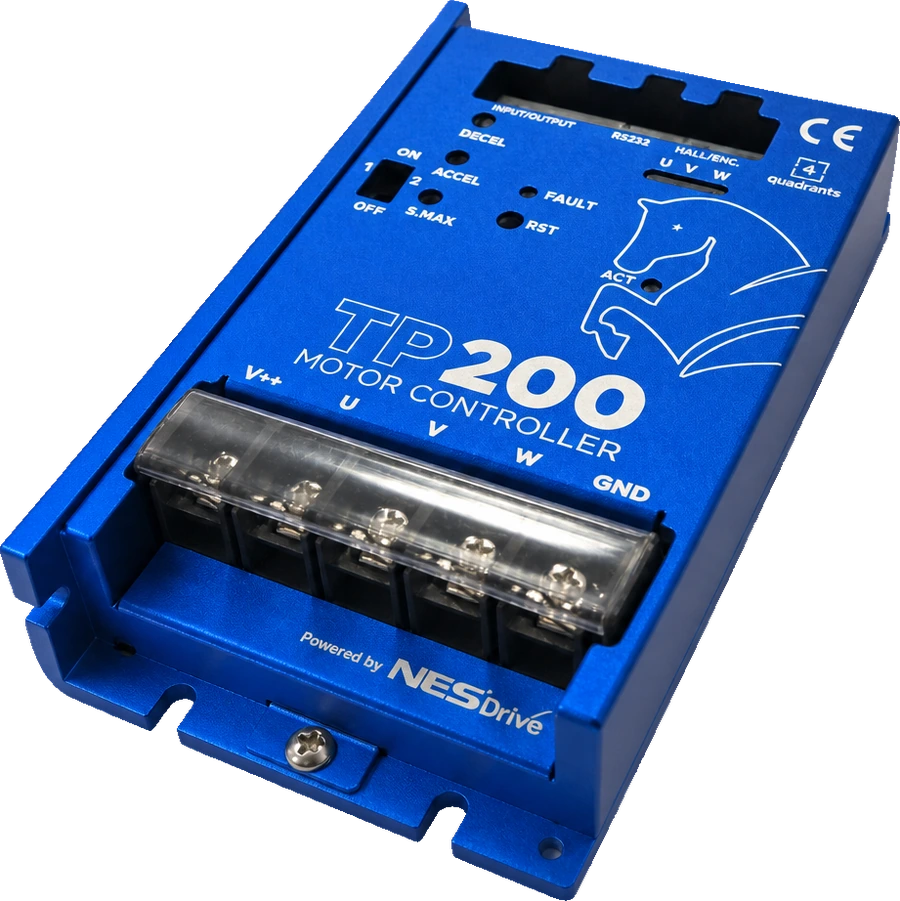
On the NESDrive side the split is clear: the TULPAR series is for brushless (BLDC / PMSM / ACIM) motors, while the BAMSI series is for brushed DC motors. Both series come with 4-quadrant (4Q) regenerative topology, multiple communication options and multi-layer protection as standard. Use the configurator on the product pages to enter your current/voltage point and see the right model instantly.
Share your application requirements and our engineering team will recommend the best NESDrive model.