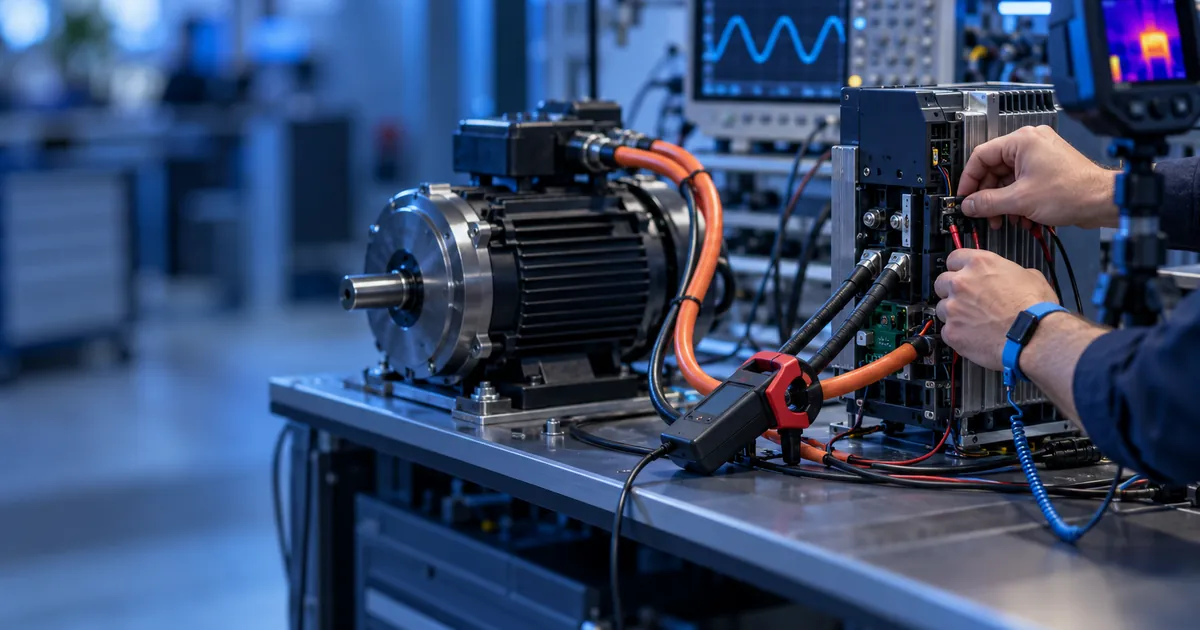
 Technical
 What Do the Protection Layers in a Motor Drive Do?
A motor drive is a power device that routes hundreds of amps from the battery to the motor. At that power level a small fault turns into major damage: a burnt MOSFET, a melted cable or a damaged motor. Protection layers exist precisely to break that chain.
Overcurrent Protection
If the motor stalls, the load rises unexpectedly or the output shorts, current reaches a dangerous level within a tiny fraction of a second. The drive measures current continuously and cuts the output when the threshold is exceeded. There are two distinct limits: rated current (continuous) and peak current (short duration). Hitting peak current at start-up is normal; running there continuously is not.
Over-temperature Protection
The drive monitors its own temperature. As it approaches the threshold it first reduces current; beyond it, it stops completely. This behaviour is deliberate: rather than halting the vehicle abruptly, it lowers performance and gives the operator time. If your drive slows down on hot days, it may be protection working rather than a fault; review mounting and ventilation.
Reverse Polarity Protection
Connecting the battery the wrong way round is one of the most common field installation errors and instantly kills an unprotected board. Reverse polarity protection blocks current in that case. Still, it is a safety net, not a licence: always verify polarity before connecting.
Short-circuit Protection
If motor phase cables touch each other or the chassis, current grows uncontrolled. Short-circuit protection detects this very quickly and shuts the output down. Repeated short-circuit trips usually indicate a problem in the wiring or the motor rather than the board.
When Protection Trips
- Stop the vehicle and note the fault state; it can be read through NESDrive Studio.
- For over-temperature, let the board cool and check mounting and ventilation.
- If overcurrent repeats, review the load profile; the drive current class may not suit the application.
- If short circuit repeats, measure the motor windings and phase cables and find the fault before reconnecting.
- Never disable a protection; it is a warning, not an obstacle.
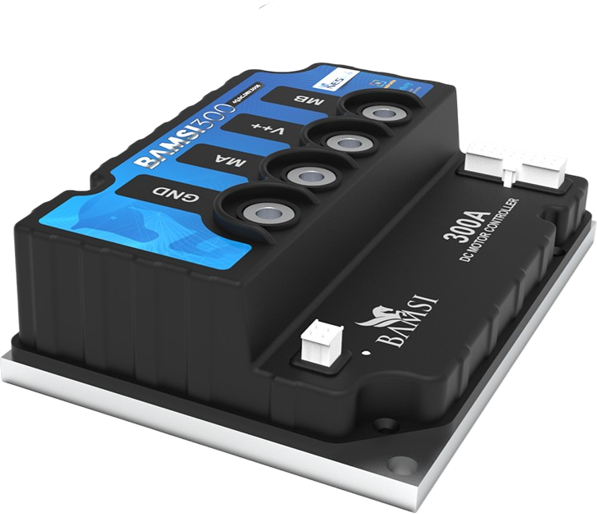
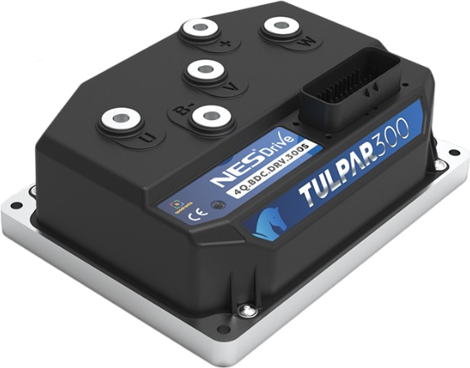
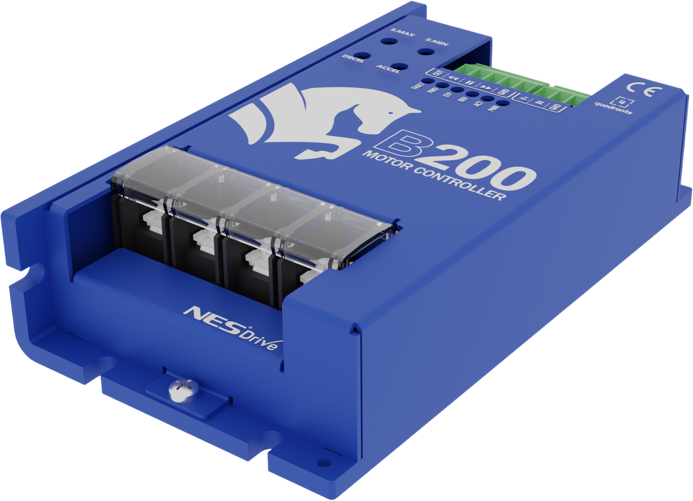
Share your application requirements and our engineering team will recommend the best NESDrive model.
 Product
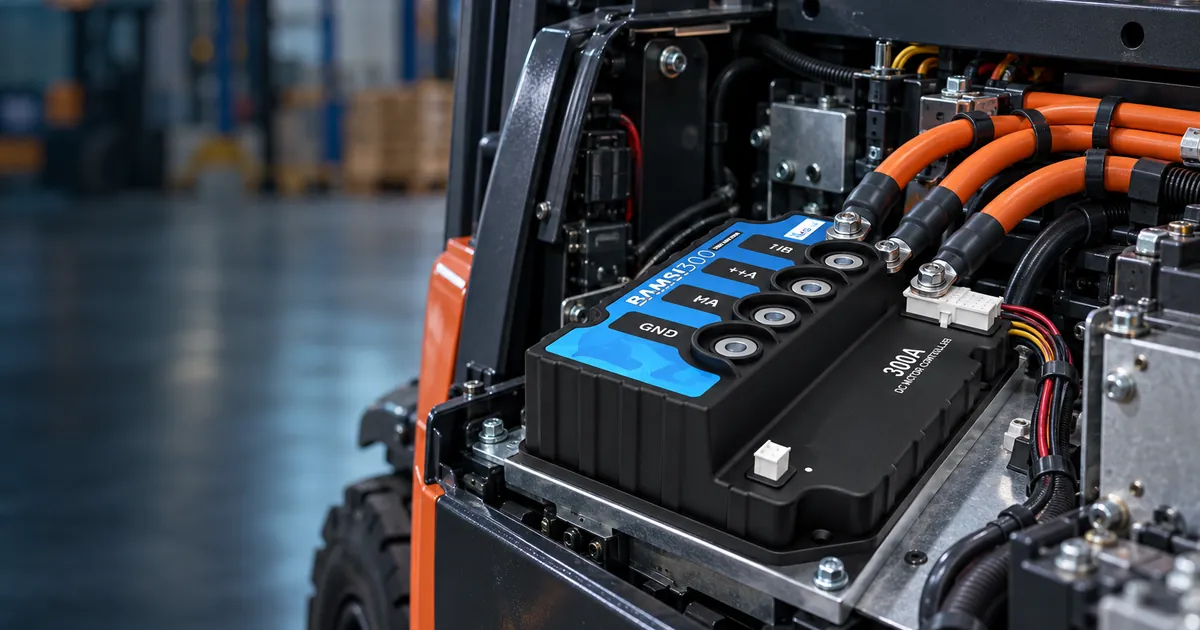
BAMSI 300 Overview: 300 A Brushed DC Controller
BAMSI 300: a 4Q brushed and series-wound DC motor controller for 12–72 V with 300 A rated and 450 A peak current, for forklifts and warehouse equipment.
 Application
Motor Drive Guide for Forklifts and Stackers
Drive selection for traction and lift motors in electric forklifts and stackers: current/voltage by tonnage, regenerative braking and the right NESDrive model.