 Product
TULPAR 150 Overview: 20 A Compact BLDC Controller
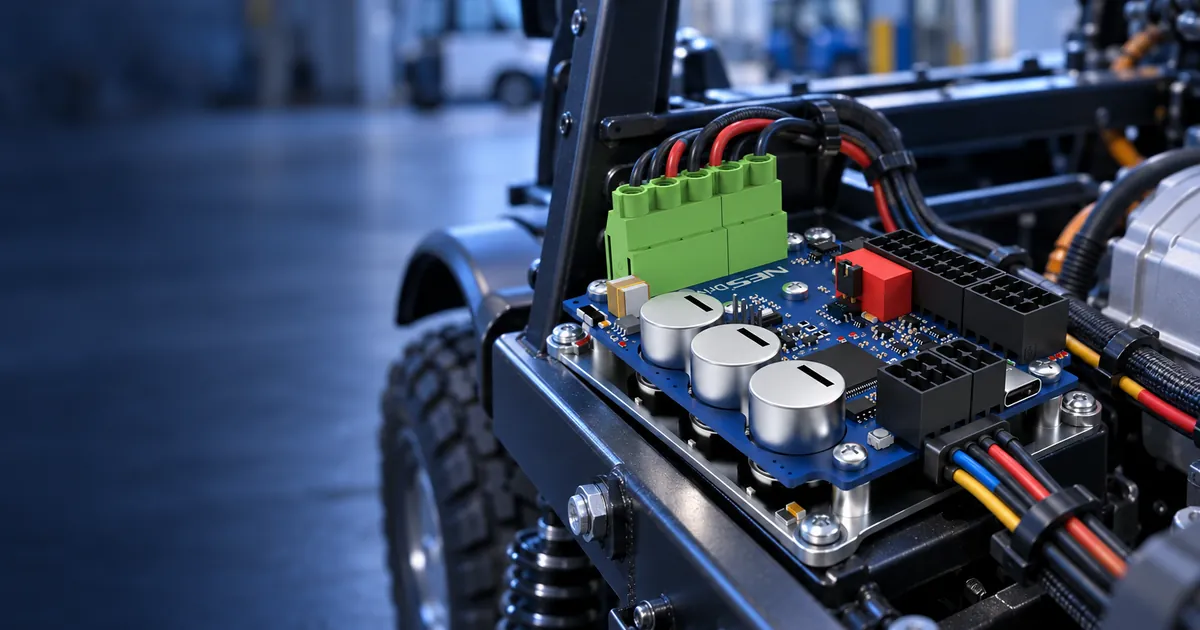
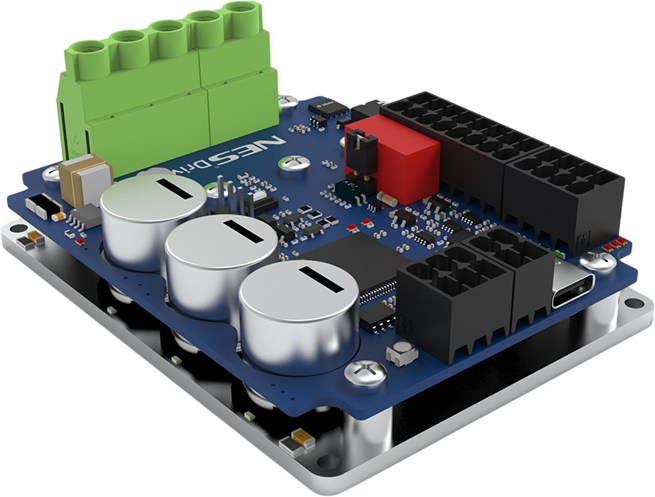
TULPAR 150 is a compact brushless motor controller designed for light commercial vehicles and mobility solutions. Although rated at 20 A, it can deliver 60 A peak current — a strong reserve for light vehicles that start frequently.
Key Ratings
- Operating voltage: 12–48 V DC
- Current: 20 A rated, 60 A peak (RMS)
- Compatible motors: BLDC, PMSM and AC induction (ACIM)
- Topology: four-quadrant (4Q) regenerative
- Communication: CANopen and Modbus; USB, RS232, CAN bus and RS485 interfaces
- Feedback: encoder and Hall
- I/O: 3 digital inputs, 2 analog inputs, 2 digital outputs, 1 brake output
- Safety: isolated STO (Safe Torque Off) input
- Operating temperature: −10 °C / +40 °C
Highlights
A peak current three times the rated current gives the motor full power at start-up and acceleration while staying compact in continuous operation. The isolated STO input stands out for applications seeking a safety function in a small class. USB, RS232, CAN bus and RS485 interfaces offer wide connectivity, and CANopen connects it to the vehicle network.
Where It Is Used
- Light commercial electric vehicles
- Personal and urban mobility vehicles
- 48 V traction up to about 1000 W
- Compact machines that require STO
TULPAR 150 or Another Model?
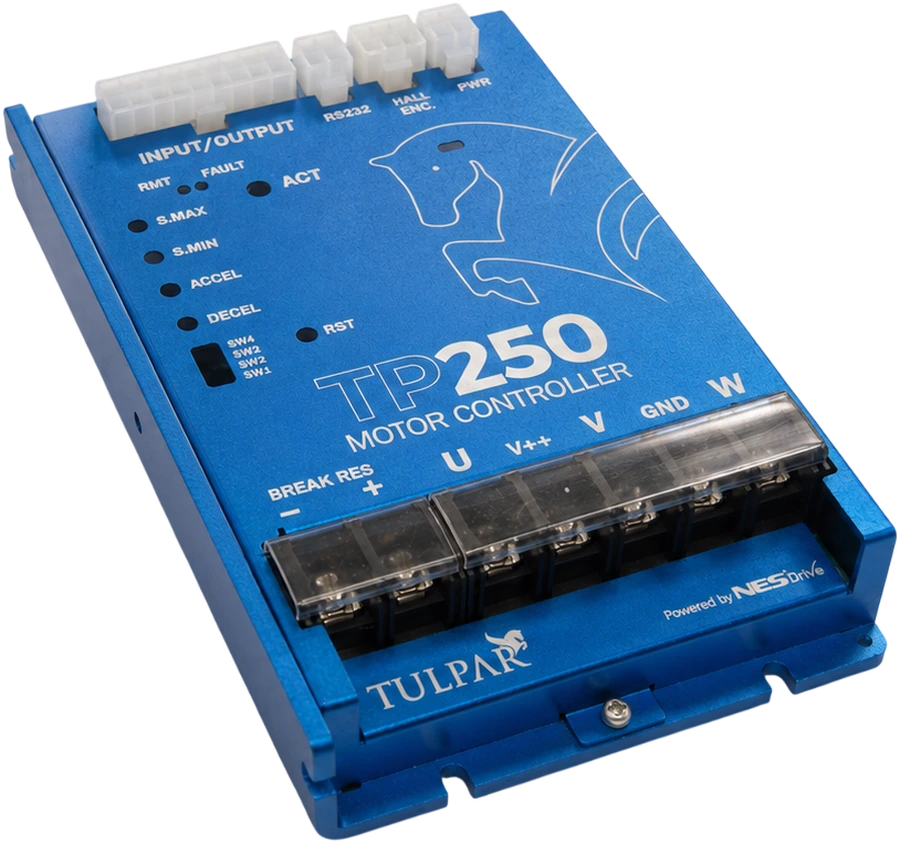
For lower power, TULPAR 100 (10 A rated, 30 A peak) fits; for higher continuous current, TULPAR 250 (50 A rated). We explain the current calculation for a 48 V motor in choosing a 48 V motor controller.
For the specification table and a price quote, visit the TULPAR 150 product page.

Share your application requirements and our engineering team will recommend the best NESDrive model.
 Product
TULPAR 100 Overview: 10 A Compact BLDC Controller
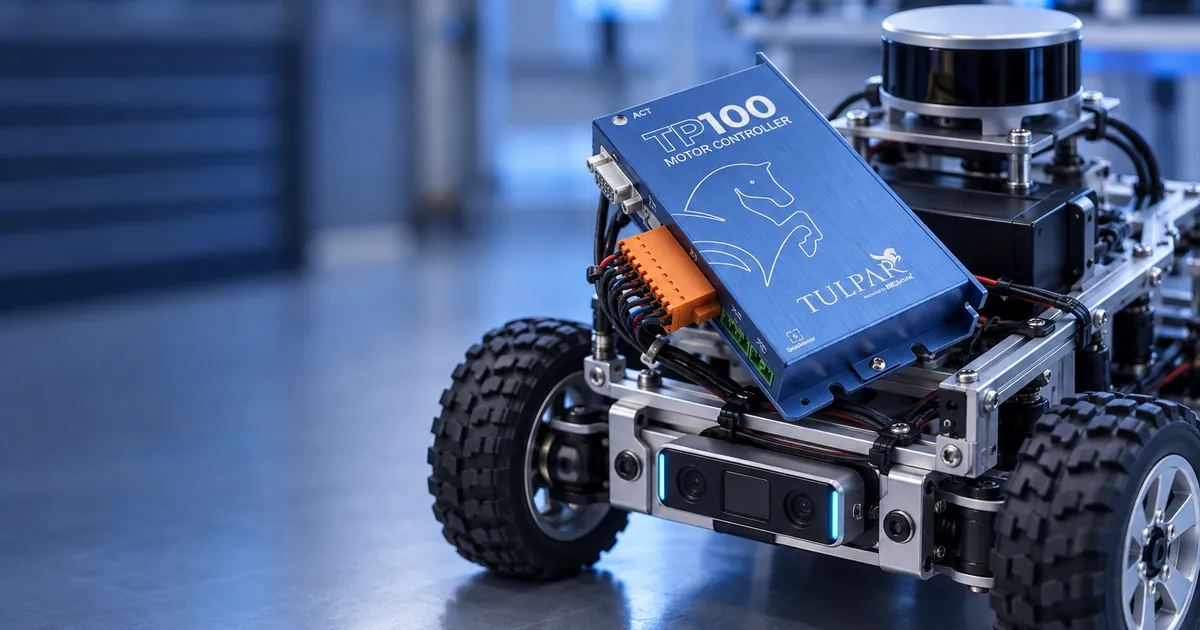
TULPAR 100 (TP100): a 4Q BLDC/PMSM/ACIM motor controller for 12–48 V with 10 A rated and 30 A peak, isolated STO, CANopen and optional resolver.
 Product
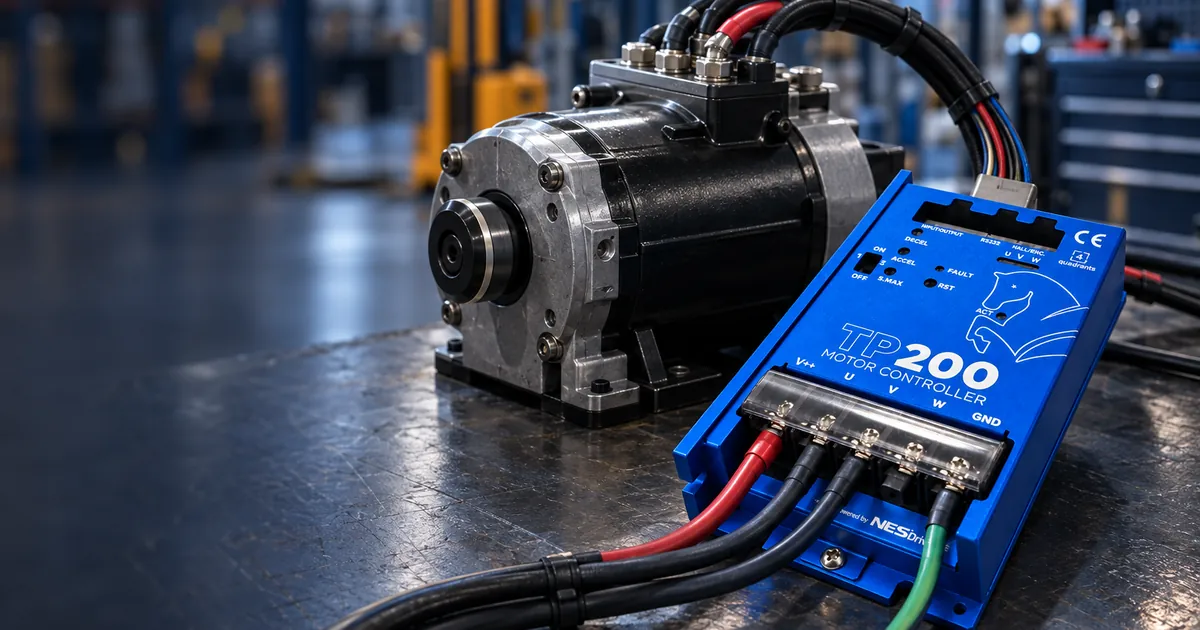
TULPAR 200 Overview: 50 A BLDC Motor Controller
TULPAR 200: a 4Q BLDC/PMSM/ACIM motor controller for 12–48 V with 50 A rated and 55 A peak current and Modbus. Features and use in forklifts and AGVs.